
Why Choose a Commercial Coffee Machine?
A commercial coffee machine is more than a polished fixture behind the counter. It is a working tool for serving consistent drinks, managing busy periods, and supporting staff routines. The National Coffee Association’s 2024 National Coffee Data Trends report found that 67% of American adults had coffee in the past day. That is a large daily audience, but it does not guarantee demand at any one café. The practical question is whether your machine can keep pace when orders stack up and milk pitchers crowd the counter.
For espresso-focused businesses, coffee educator James Hoffmann’s reminder is useful: “Espresso is a brewing method, not a bean.” A capable machine helps staff control key parts of that method, including water temperature, pressure, and shot timing. Those controls matter when one barista is pulling shots while another steams milk. They matter less if the machine is poorly maintained or the team lacks training. That is the part buyers sometimes underestimate.
Choosing a commercial coffee machine means weighing daily volume, drink range, counter space, cleaning needs, and service access. The right model can support reliable service and reduce workflow friction. It cannot fix a weak menu or inconsistent technique. Even experienced operators may need to adjust their expectations after installation. A machine that looks impressive in a showroom can feel cramped during a morning rush. Use industry data as context, then compare specifications with your actual service conditions.
What Is a Commercial Coffee Machine?
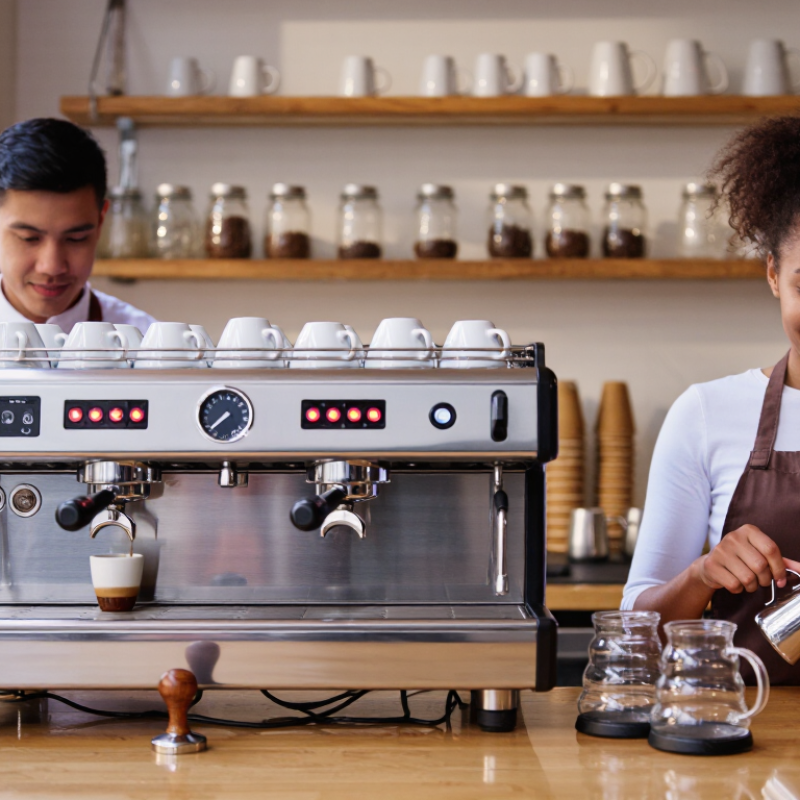
A commercial coffee machine is equipment designed to prepare drinks repeatedly in workplaces such as cafés, hotels, and busy offices. It is built to handle more orders than a typical home machine, often with sturdier parts, larger water capacity, and controls suited to regular service. Some models brew espresso; others make batch coffee or both. The exact meaning of “commercial” is not perfectly fixed, so the label alone does not tell you how many drinks a machine can manage.
The key difference is its expected workload, not simply its size. During a morning rush, staff may need to steam milk, refill cups, and serve several orders in quick succession. A suitable machine should maintain dependable temperature and pressure, while allowing routine cleaning and maintenance. Still, a commercial model is not automatically the right choice for every business. Water quality, available counter space, electrical capacity, and staff training all matter. These details are easy to overlook.
Tips: Estimate peak-hour orders before choosing. Check cleaning steps and service access, too. Ask how often filters or seals need attention. Small details count. And be realistic: a machine that looks impressive may be awkward to use in a cramped workspace.
Why Choose a Commercial Coffee Machine? - What Is a Commercial Coffee Machine?
| Dimension | Commercial Coffee Machine | Typical Home Coffee Machine | Why It Matters |
|---|---|---|---|
| Main purpose | Designed to prepare drinks repeatedly in cafés, restaurants, offices, and other high-use settings. | Designed primarily for personal or household use. | Choose equipment based on expected demand and operating conditions. |
| Output and workload | Built for sustained service; suitable daily output depends on machine type, configuration, and workflow. | Usually suited to a smaller number of drinks prepared at a time. | A machine should be selected with peak-hour demand in mind, not just the daily average. |
| Brewing capacity | Many espresso models can brew multiple shots in parallel; batch brewers can prepare larger quantities of filter coffee. | Often prepares one drink or a smaller batch at a time. | Higher capacity can help reduce queues during busy periods. |
| Water supply | Some models connect directly to a water line; others use a reservoir. | Many models rely on a manually filled reservoir. | A plumbed connection can reduce refilling, but requires suitable installation and water treatment. |
| Heat recovery | Many commercial espresso machines are engineered to recover heat and support repeated brewing and steaming. | May need more time between consecutive drinks, depending on its design. | Consistent recovery helps maintain service pace during back-to-back orders. |
| Milk preparation | Espresso models commonly include a steam wand; some configurations provide more than one wand. | Milk steaming may be slower or unavailable, depending on the machine type. | Milk-drink menus require adequate steaming capacity and regular cleaning. |
| Controls and workflow | May offer programmable doses, multiple group heads, or other features for repeatable service. | Typically has a simpler workflow for occasional use. | Programmable settings can help staff produce more consistent drinks. |
| Installation and space | Can require a sturdy counter, suitable electrical supply, drainage, and professional installation, depending on the model. | Often designed for simpler countertop setup. | Check site requirements before purchasing or planning a café layout. |
| Maintenance | Needs routine cleaning and descaling; frequent commercial use may also call for scheduled professional servicing. | Needs regular cleaning and descaling, generally at a lower usage level. | Water quality and maintenance routines affect performance and equipment life. |
| Best fit | Businesses or workplaces that need frequent, repeatable coffee service. | Households or low-volume settings with occasional drink preparation. | A commercial machine is most valuable when its capacity and workflow match real demand. |
Note: Features and capacity vary by machine type and model. Confirm operating requirements with the equipment specifications and a qualified installer.
Related Posts
-
Unlocking the Future of Coffee Experience with Innovative Commercial Coffee Machines
-
10 Reasons Why Investing in the Best Coffee Machine Boosts Your Business Productivity
-
Solutions for Sourcing the Best Coffee Machine for Your Coffee Shop
-
The Evolution of Barista Machines and Its Impact on Global Coffee Trends
-
Leading Manufacturer of Best Barista Machines Exporting to Global Markets with Proven Quality
-

What is a Barista Machine? Ultimate Guide to Brewing Cafe-Quality Coffee at Home