
Top 10 Types of Explosion Proof Robots for Global Buyers

Industrial sites rarely offer clean, predictable conditions. Dust settles on sensors, heat distorts cameras, and narrow passages challenge every moving system. In these environments, an Explosion-Proof Robot must do more than carry a certified enclosure. It must sense hazards, communicate reliably, and remain controllable when visibility suddenly drops.

Safety engineer Dr. Michael L. Brown describes the design priority clearly: “A robot is only as dependable as its weakest safety control.” This principle deserves attention from global buyers. Certification matters, but it does not replace practical testing. A robot may perform well in a laboratory and struggle beside a vibrating pump, leaking valve, or crowded loading route. Real experience exposes those gaps.

This guide examines the Top 10 Types of Explosion Proof Robots for Global Buyers. It compares inspection robots, firefighting platforms, unmanned ground vehicles, robotic arms, drones, and specialized systems for hazardous industrial zones. Each category has different strengths. Some offer thermal imaging. Others provide chemical sensing, remote manipulation, or extended endurance.

The details matter.

Buyers should examine protection ratings, battery design, radio performance, payload limits, maintenance access, and operator training. Regional certification requirements also influence procurement decisions. A suitable platform must match the site, not merely the sales brochure.

No robot is perfect. That is worth admitting. Reliability improves when buyers test mobility, recovery procedures, and communication loss before deployment. The best choice balances certified protection with measurable field performance, clear documentation, and support that remains available after installation.
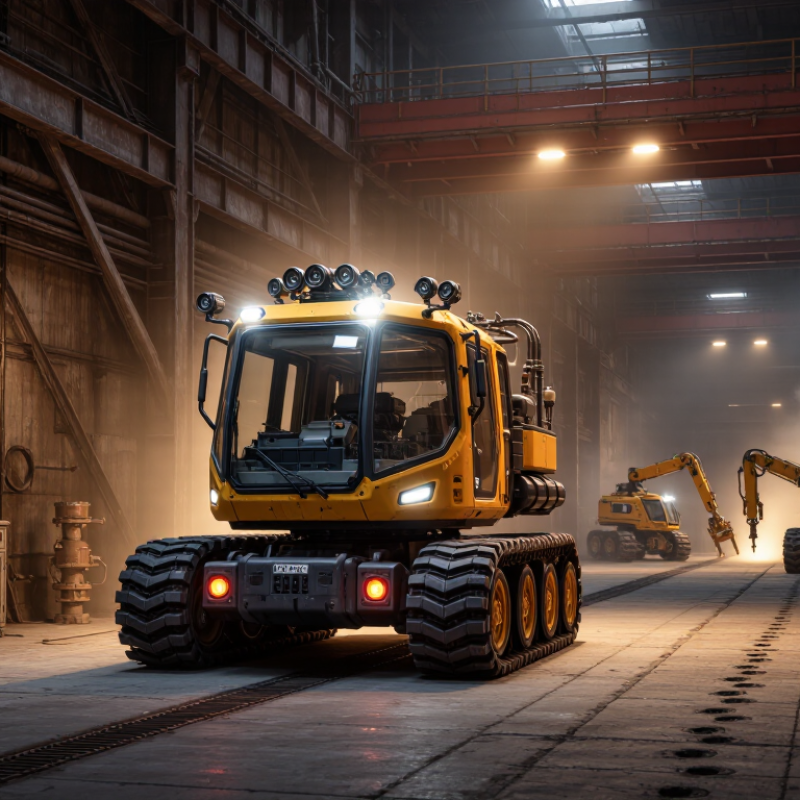
Top 10 Types of Explosion Proof Robots for Global Buyers

Explosion-Proof Robot Fundamentals and Hazardous-Zone Classifications

Top 10 Types of Explosion Proof Robots for Global Buyers

Explosion-proof robots are designed for work where sparks, heat, or static electricity may ignite gas, vapor, or dust. Their protection depends on sealed housings, controlled surface temperatures, safe electrical circuits, and carefully selected batteries. A robot is not automatically safe because it has a rugged metal shell. Small details matter.

Hazardous-zone classification guides the selection. For gas environments, Zone 0 means an explosive atmosphere exists continuously or for long periods. Zone 1 indicates likely occurrence during normal operation, while Zone 2 means it appears only occasionally. Dust areas use Zones 20, 21, and 22 with similar logic. Buyers should also verify gas groups, temperature classes, equipment protection levels, and ingress protection. IEC 60079, IECEx, ATEX, and local regulations may apply differently across markets. Check the certificate.

Tips: Match the robot’s certification to the exact site classification, not a general industry label. Confirm battery charging rules, sensor limitations, maintenance procedures, and emergency recovery methods. A site survey should include ventilation, material properties, cleaning routines, and expected temperatures. One practical weakness is often overlooked: a certified robot may still fail operationally if its communication system loses connection behind steel walls or thick process equipment. Reliability requires both hazardous-area compliance and realistic field testing.

Top 10 Types of Explosion-Proof Robots for Global Buyers

Explosion-proof robots are available in different mechanical architectures. The chart compares representative axis or mobility configurations commonly used when selecting robots for hazardous industrial environments.

Hazardous-area suitability is not determined by robot type alone. Buyers must verify the certification for the intended location, including IEC or ATEX zone classification, Equipment Protection Level, gas or dust group, temperature class, ingress protection, and the complete robot system. Zone 0 and Zone 20 indicate continuous, frequent, or long-duration explosive atmospheres; Zone 1 and Zone 21 indicate an atmosphere likely to occur occasionally; Zone 2 and Zone 22 indicate an atmosphere unlikely to occur during normal operation and present only for a short time.

Data basis: representative architecture characteristics derived from established industrial robot classifications. Axis counts are typical configurations rather than market-share or brand-specific data. Hazardous-area classifications align with IEC 60079-10-1, IEC 60079-10-2, IEC 60079-14, and the ATEX framework.

Ten Major Explosion-Proof Robot Types by Function and Industry

Top 10 Types of Explosion Proof Robots for Global Buyers

Ten Major Explosion-Proof Robot Types by Function and Industry

Explosion-proof robots support safer work in areas with flammable gases, vapors, or dust. Their design must match the hazardous-zone classification, temperature rating, and operating environment. Inspection robots use cameras, thermal sensors, and lighting to examine tanks, valves, and structural surfaces. Patrol robots monitor storage yards, chemical plants, and fuel terminals with scheduled routes. Gas-detection robots measure leaks near pipelines, processing equipment, and confined spaces. Small tracked robots can reach narrow corridors and uneven floors.

Other types serve more specialized needs. Pipeline robots inspect internal surfaces and identify corrosion or blockages. Cleaning robots remove dust from mining facilities, grain plants, and industrial floors. Material-handling robots move tools, containers, or samples across restricted work areas. Sampling robots collect air, liquid, or residue while reducing human exposure. Emergency-response robots provide remote video, temperature readings, and basic suppression support during abnormal events. Offshore inspection robots examine decks, tanks, and enclosed utility spaces where saltwater and humidity create extra risks.

Selection should reflect real site experience, not only a product sheet. A robot may perform well in a laboratory but struggle with mud, poor lighting, or wireless dead zones. Details matter. Check certification documents, battery protection, grounding methods, communication reliability, and maintenance access. Operators also need practical training and clear recovery procedures when the robot stops unexpectedly. Conditions change. Even a certified system requires site-specific risk assessment and regular inspection.

Top 10 Types of Explosion Proof Robots for Global Buyers - Ten Major Explosion-Proof Robot Types by Function and Industry

No. Explosion-Proof Robot Type Primary Function Typical Industries Typical Hazardous Locations Common Sensors or Tools Mobility Best-Fit Buyer Requirement
1 Explosion-Proof Inspection UGV Remote visual inspection of equipment, structures, valves, gauges, and process areas without exposing personnel to hazardous atmospheres. Oil and gas, petrochemical, chemical processing, power generation, and industrial manufacturing. Refineries, process units, loading areas, compressor stations, and hazardous production zones. High-definition and thermal cameras, pan-tilt-zoom camera, microphone, speaker, and optional gas sensors. Tracked or four-wheel ground vehicle. Routine patrols, remote rounds, condition monitoring, and reduction of worker exposure.
2 Explosion-Proof Gas-Detection Robot Continuous or scheduled detection of combustible, toxic, and oxygen-deficient atmospheres. Oil and gas, chemical plants, wastewater treatment, battery manufacturing, and underground utilities. Tank farms, confined spaces, pipe racks, utility tunnels, and areas near possible gas leaks. LEL sensors, oxygen sensors, electrochemical toxic-gas sensors, photoionization detectors, and thermal cameras. Tracked, wheeled, or tethered mobile platform. Early leak detection, alarm mapping, environmental monitoring, and safer pre-entry assessment.
3 Explosion-Proof Firefighting Robot Remote fire suppression, cooling, reconnaissance, and delivery of water or foam in high-risk areas. Petrochemical, oil storage, gas processing, chemical manufacturing, ports, and emergency services. Storage tank farms, fuel terminals, chemical warehouses, and industrial fire scenes. Thermal imaging camera, visible-light camera, water monitor, foam system, and temperature sensors. Heavy-duty tracked or wheeled vehicle. Remote firefighting where heat, smoke, toxic gases, or explosion risk makes direct human intervention unsafe.
4 Explosion-Proof Tank and Confined-Space Robot Inspection, measurement, and data collection inside tanks, vessels, ducts, and other restricted-access spaces. Oil storage, chemical processing, shipbuilding, utilities, and industrial maintenance. Storage tanks, process vessels, sewers, underground chambers, and ventilation ducts. Low-light camera, ultrasonic thickness probe, gas detector, laser measurement, and crawler camera. Small tracked crawler, tethered crawler, or compact articulated platform. Non-entry inspection, corrosion assessment, weld examination, and confined-space risk reduction.
5 Explosion-Proof Pipeline Inspection Robot Internal or external inspection of pipelines for corrosion, deformation, blockages, leaks, and structural defects. Oil and gas transmission, chemical processing, water utilities, district energy, and mining. Process piping, transfer lines, underground pipelines, and pipeline corridors. Cameras, magnetic flux leakage tools, ultrasonic sensors, inertial measurement units, and gas detectors. Wheeled, magnetic, or tracked pipe crawler; some systems are tethered. Accurate inspection of difficult-to-access pipe sections while limiting shutdowns and personnel entry.
6 Explosion-Proof Material-Handling AMR Autonomous or remotely supervised transport of drums, containers, raw materials, and packaged goods. Chemical, pharmaceutical, paint, battery, food-processing, and hazardous-material warehouses. Hazardous storage rooms, filling areas, production corridors, and transfer stations. Laser or vision navigation, load sensors, barcode or RFID reader, collision sensors, and safety scanners. Autonomous differential-drive or omnidirectional wheeled platform. Safe, repeatable movement of materials where flammable vapors, gases, or dust may be present.
7 Explosion-Proof Manipulator Robot Remote handling, valve operation, sampling, tool use, and maintenance support in hazardous process areas. Chemical, petrochemical, pharmaceutical, nuclear-support, and specialty manufacturing facilities. Process units, laboratories, filling lines, sampling points, and restricted maintenance zones. Robotic arm, gripper, torque tool, sampling device, camera, and force or torque sensors. Fixed arm, mobile manipulator, or remotely operated platform. Precise remote intervention where manual handling creates ignition, exposure, or access risks.
8 Explosion-Proof Aerial Inspection Robot Aerial inspection of elevated structures, roofs, flare stacks, tanks, transmission assets, and difficult terrain. Oil and gas, petrochemical, power, mining, ports, and large-scale industrial infrastructure. Tank farms, offshore facilities, elevated pipe racks, stacks, and industrial sites with restricted access. Optical camera, thermal camera, gas sensor, LiDAR, zoom lens, and structural inspection payloads. Multirotor or tethered aerial platform. Rapid visual surveys and reduced use of scaffolding, lifts, or rope-access personnel.
9 Explosion-Proof Sewer and Utility Robot Inspection and mapping of underground drainage, sewer, utility, and service networks. Municipal utilities, wastewater treatment, industrial parks, mining, and infrastructure maintenance. Sewers, manholes, drainage channels, utility tunnels, and underground service corridors. Pan-tilt camera, sonar, gas detector, distance measurement, inclination sensor, and location beacon. Tethered wheeled or tracked crawler. Assessment of methane, hydrogen sulfide, oxygen deficiency, blockages, cracks, and sediment buildup.
10 Mining Explosion-Proof Inspection Robot Remote inspection, gas monitoring, mapping, and post-incident reconnaissance in underground or surface mining environments. Coal mining, metal mining, mineral processing, tunneling, and bulk-material handling. Underground roadways, coal faces, conveyor galleries, shafts, tunnels, and processing facilities. Methane and carbon-monoxide sensors, thermal camera, visible camera, LiDAR, dust monitor, and gas alarm. Heavy tracked vehicle or compact articulated crawler. Remote access to unstable, dusty, poorly ventilated, or potentially explosive underground areas.

Buyer note: “Explosion-proof” suitability depends on the complete robot configuration, battery system, operating environment, hazardous-area classification, gas or dust group, temperature class, and applicable local certification. Confirm the required certification and zone or division rating before procurement.

Key Technologies Behind Safe Operation in Explosive Environments

In explosive environments, robot safety begins before movement. Engineers first identify gas, vapor, or dust hazards, then match the robot to the area classification. A sealed enclosure protects internal circuits from ignition risks. Carefully controlled surface temperatures prevent hot spots near combustible materials. Every joint needs attention.

Explosion-proof robots often combine flame-resistant housings, sealed cable glands, and intrinsically safe electrical circuits. These circuits limit voltage, current, and stored energy during faults. Thermal cameras and gas sensors can detect abnormal conditions early. However, sensors must also meet the site’s safety requirements. A normal commercial sensor may create unacceptable risk.

Power management is equally important. Batteries require thermal monitoring, current protection, and stable charging controls. Some robots use certified purge-and-pressurize systems to keep hazardous gases away from sensitive components. Communication links should support secure remote control and automatic shutdown after signal loss. That detail matters when visibility disappears.

Mechanical design also reduces danger. Low-spark materials, controlled motor temperatures, and smooth movement help avoid friction-related ignition. Operators should inspect seals, connectors, and wheel surfaces before every shift. Dust can collect in small gaps. It is easy to miss.

No robot is automatically safe because it carries a safety label. Certification, documented testing, trained operators, and scheduled maintenance must work together. Field experience also reveals uncomfortable limits. A robot may resist one hazard but perform poorly in heat, moisture, or heavy dust. Safe deployment requires honest risk review, not optimistic assumptions.

Performance, Certification, and Maintenance Factors for Global Buyers

Top 10 Types of Explosion Proof Robots for Global Buyers

Explosion-proof robots serve hazardous sites where sparks, heat, or static electricity create serious risks. Common types include inspection rovers, tracked robots, mobile manipulators, camera crawlers, drones, robotic arms, pipe crawlers, firefighting units, sampling robots, and autonomous patrol vehicles. Each design suits different terrain and operational pressure. A tracked rover may cross wet floors, while a pipe crawler needs precise traction inside narrow lines. Performance depends on more than payload. Buyers should examine sensor accuracy, battery duration, turning radius, communication stability, and emergency stopping performance.

Certification must match the actual site classification. ATEX and IECEx commonly support international projects, while local electrical codes may apply elsewhere. Check the equipment group, hazardous zone, gas or dust category, and temperature class. A certificate alone is not enough. The robot configuration must match the certified enclosure, battery, sensors, and accessories. Small modifications can invalidate compliance. This detail is often missed during procurement. Request certificates, test reports, manuals, and traceable serial records before shipment.

Maintenance planning protects both uptime and certification integrity. Inspect seals, cable glands, wheel coatings, thermal limits, and grounding points after each demanding shift. Salt, dust, and solvent residue can damage protective surfaces quickly. Keep spare seals and approved batteries available near the site. Software updates also need controlled review. A newer version may improve navigation but affect safety functions. Field teams sometimes overestimate autonomy. Manual recovery remains necessary when radio signals weaken or debris blocks movement. That limitation deserves honest planning.

How to Select the Right Explosion-Proof Robot for Each Application

Selecting the right explosion-proof robot starts with the worksite, not the robot catalog. Identify the hazardous area classification, gas or dust type, temperature range, and ventilation conditions. A robot designed for gas environments may not suit combustible dust. Check the required protection method and independent certification for the target region.

Match mobility to the floor. Wheeled robots suit smooth warehouse surfaces and long inspections. Tracked models handle gravel, cable ramps, and uneven platforms. Legged robots can cross stairs, but they usually require more complex control. Confirm payload needs before choosing cameras, gas sensors, lights, or robotic arms. Every added kilogram affects battery life and stability.

Look closely at operating distance and maintenance. Remote control should remain stable behind concrete walls, steel tanks, or process equipment. Thermal cameras need suitable temperature ratings, while gas sensors require calibration records and replacement schedules. Sealed housings help, but ingress protection alone does not prove explosion protection. A common mistake is trusting a product label without reviewing its certification details. In practice, our first shortlist is not always right. Run a site trial with real dust, low light, narrow passages, and emergency-stop checks. Small failures often appear there.