China Top Coffee Manufacturers for Global Buyers?

China’s coffee manufacturing sector is becoming more relevant to international buyers. It now includes instant coffee producers, roasted coffee factories, capsule suppliers, equipment makers, and private-label specialists. The opportunity is broad, but “top” should not mean “largest” alone.

The United States Department of Agriculture’s Coffee: World Markets and Trade report forecast global coffee production at about 176.2 million 60-kilogram bags for 2024/25. This scale increases pressure on manufacturers to deliver stable quality, efficient packaging, and reliable shipment schedules. China’s expanding café culture also supports domestic roasting and processing capacity. However, overseas buyers still need evidence, not attractive product pages.

James Hoffmann, author of The World Atlas of Coffee, writes, “Coffee is a fruit.” That simple point matters. Origin, harvest condition, storage, roasting, and extraction can change the final cup dramatically. A factory producing a dark roast for vending machines may not suit a specialty coffee importer. The reverse can also be true.

This guide examines leading Chinese coffee manufacturers through practical buyer criteria. These include production capacity, OEM flexibility, quality-control systems, food-safety certifications, traceability, packaging options, minimum order quantities, and export experience. Product samples should be tested beside certificates and factory records. A polished website proves little.

No supplier ranking is permanently accurate. Prices shift. Equipment changes. Certifications expire. Some manufacturers disclose limited information, which creates an uncomfortable gap for buyers. Careful verification remains essential before signing contracts, approving samples, or committing to long-term volumes.
China Top Coffee Manufacturers for Global Buyers?

Map China’s Coffee Supply: Yunnan Produces About 98% of Beans (USDA)

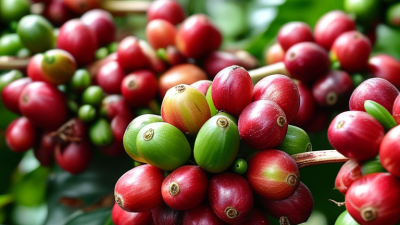
China’s coffee supply map begins in Yunnan, which produces about 98% of the country’s coffee beans, according to USDA reporting. The province’s mountains, red soil, and seasonal rainfall create varied growing conditions. Small farms often cultivate coffee between higher elevations and forested slopes. The landscape matters.

For global buyers, Yunnan is more than a production statistic. It is a sourcing region with different microclimates, farm sizes, and processing practices. Washed, natural, and honey-processed lots can show noticeably different aromas and acidity. Buyers should request harvest dates, altitude records, processing details, moisture readings, and traceability documents. A physical sample is essential. Paper specifications cannot reveal every defect.

That figure can mislead. Yunnan dominates China’s output, but its coffee is not uniform. A lot from one valley may taste clean and citrus-like, while another shows heavier body or uneven drying. Weather can also affect consistency between seasons. Careful buyers should compare multiple samples, confirm shipment conditions, and discuss quality tolerances before contracting. The supply chain is improving, yet gaps remain in farm-level data and post-harvest consistency. Treating Yunnan as one single origin would be convenient, but inaccurate.

Compare Manufacturers by Annual Capacity, Output, and 60-Kilogram Bags

China Top Coffee Manufacturers for Global Buyers?

Compare Manufacturers by Annual Capacity, Output, and 60-Kilogram Bags

For global buyers, annual capacity is only the starting point. USDA Foreign Agricultural Service projected world coffee production at 174.9 million 60-kilogram bags in 2024/25. This benchmark shows the scale of the market, but it does not prove a factory’s real output. Chinese manufacturers may report installed roasting or processing capacity, while production records show a smaller figure.

A useful comparison converts tonnes into standard bags. One metric tonne equals approximately 16.67 bags. A factory claiming 12,000 tonnes of annual capacity therefore represents about 200,000 bags. If its verified output reaches 7,800 tonnes, utilization is 65 percent. That gap matters. It may reflect seasonal demand, maintenance, labor limits, or weak orders. Capacity is not output.

In supplier audits, buyers should request production records, shipment volumes, and recent third-party certifications. The International Coffee Organization’s 2024 market reporting supports using consistent 60-kilogram units for cross-market comparison. Ask whether figures cover green coffee, roasted coffee, or finished products. These categories are not interchangeable. A factory can appear large on paper but lack enough packing lines for export orders. I would also check peak-month output, not only annual totals. Annual averages can hide delays. That is an imperfect measure, but still more useful than marketing claims.

China Top Coffee Manufacturers for Global Buyers

China’s estimated green-coffee output compared by annual production and standard 60-kilogram bag equivalents.

The figures represent rounded national-sector estimates rather than undisclosed company-level factory capacities. One standard coffee bag equals 60 kilograms, so the bag-equivalent values are calculated from annual output. China’s coffee production is concentrated mainly in Yunnan Province, while manufacturers also process imported green coffee for domestic and export markets.

Sources: USDA Foreign Agricultural Service coffee production estimates; International Coffee Organization standard 60-kilogram bag conversion. Values are rounded for presentation.

Evaluate Bean Quality with SCA Scores, Moisture, Defects, and ISO Standards

For global buyers assessing Chinese coffee manufacturers, bean quality must be verified beyond polished product sheets. The International Coffee Organization reported global coffee consumption of about 177 million 60-kilogram bags in 2022/23. That scale increases pressure on suppliers to provide consistent, traceable lots. Ask for the harvest date, processing method, farm elevation, and independent laboratory records. Samples should be cupped using the Specialty Coffee Association’s protocol. In the familiar SCA 100-point system, scores above 80 commonly indicate specialty quality. However, a high score from one sample proves little.

Moisture deserves equal attention. Green coffee commonly performs best around 10–12% moisture, although the correct range depends on origin and processing. ISO 6673 provides a recognized method for measuring moisture in green coffee. Request the test method, equipment details, and sampling location. One dry edge sample can mislead. It happens. Defect analysis should follow ISO 10470 terminology, while older SCA grading practice often checks a 350-gram sample for primary and secondary defects. Look for stones, insect damage, black beans, broken beans, and fermentation odors.

A reliable manufacturer should retain sealed reference samples and repeat tests before shipment. Compare the supplier’s report with your own cupping results. Differences of one or two points may reflect panel variation, not dishonesty. Larger gaps need investigation. I would also check water activity, packaging integrity, and container humidity records. These details are less impressive than a score, but they often explain stale aromas after arrival. Quality control is never perfectly clean. That limitation should be documented, not hidden.

Check Export Readiness Through HS 0901, MOQ, Lead Time, and Incoterms

For global coffee buyers, export readiness begins with HS 0901, covering coffee, whether roasted, unroasted, decaffeinated, or not. Subheadings matter: HS 0901.11 commonly identifies unroasted, non-decaffeinated coffee, while HS 0901.21 covers roasted coffee. Confirm the destination tariff line before comparing offers. The USDA Foreign Agricultural Service projected 2024/25 world coffee production at about 174.9 million 60-kilogram bags, showing a large but competitive supply base. Volume alone proves little.

Ask manufacturers for a commercial sample, packing specification, recent test records, and a realistic MOQ. Green coffee MOQs may begin near one pallet, often 600–1,200 kilograms. Roasted private-label orders can require 500–2,000 bags, depending on packaging. These are working ranges, not rules. A small MOQ may hide higher unit costs. Check carefully. Lead time should include roasting, grinding, packaging, inspection, and port booking. A practical estimate is 2–4 weeks for repeat orders and 5–8 weeks for new packaging. Seasonal congestion can extend ocean transit by several weeks.

Incoterms 2020 also reveal operational maturity. FOB can suit buyers controlling freight, while CIF may simplify early shipments but requires clear insurance and destination-port responsibilities. Under DDP, verify who handles import taxes and customs compliance. The International Coffee Organization’s Coffee Market Report regularly records price volatility and shipment changes, so a quotation should state its validity period. A supplier may promise ten days, but that promise becomes weak without production capacity, booking evidence, and a documented tolerance for delays.

China Top Coffee Manufacturers for Global Buyers? - Check Export Readiness Through HS 0901, MOQ, Lead Time, and Incoterms
Supplier Profile Manufacturing Focus HS Code Typical Export Product Indicative MOQ Production Lead Time Common Packaging Indicative Incoterms Export Documentation Readiness Indicator
Profile A Large-scale roasted coffee and private-label production HS 0901
Coffee, whether or not roasted or decaffeinated
Whole bean and ground roasted coffee; standard and customized blends 500–1,000 kg 20–35 days 250 g–1 kg bags; 10–25 kg bulk cartons; valve bags available FOB major Chinese port; CIF by quotation Commercial invoice, packing list, bill of lading, certificate of origin, and product specification sheet Export-ready
Profile B Specialty roasting and customized coffee programs HS 0901
Coffee products and roasted coffee preparations
Single-origin roasted coffee, espresso blends, and customized roast profiles 100–300 kg 15–25 days 100 g–500 g retail bags; nitrogen-flushed or one-way-valve packaging EXW or FOB; FCA available for selected shipments Invoice, packing list, origin documentation, batch information, and laboratory report when requested Export-ready
Profile C Instant coffee and soluble coffee processing HS 0901
Includes soluble coffee preparations under applicable customs classification
Spray-dried or freeze-dried instant coffee; bulk and sachet formats 1,000–2,000 kg 30–45 days 15–25 kg foil-lined cartons; 1.8–3 g sachets; customized retail packs FOB, CFR, or CIF subject to destination and order volume Commercial documents, certificate of origin, ingredient declaration, COA, and food-safety records Export-ready
Profile D Capsule and single-serve coffee manufacturing HS 0901
Coffee products; final classification depends on product form and packaging
Compatible coffee capsules, drip bags, and single-serve filter products 50,000–100,000 units 25–40 days Individually sealed capsules; foil pouches; retail cartons EXW, FOB, or CIF for full-container orders Invoice, packing list, origin certificate, product specifications, packaging compliance documents, and COA Conditionally ready
Profile E Organic and sustainable coffee supply programs HS 0901
Certification requirements vary by destination market
Organic roasted coffee, certified green coffee, and traceable private-label products 300–800 kg 25–40 days Recyclable valve bags; kraft cartons; bulk lined bags FOB or CIF; DAP subject to destination-country import arrangements Invoice, packing list, origin certificate, organic certificate where applicable, traceability records, and COA Export-ready
Profile F Small-batch roasting and flexible private-label production HS 0901
Coffee beans and roasted coffee products
Small-batch roasted coffee, custom blends, and sample-to-production services 50–150 kg 10–20 days 250 g–1 kg bags; sample packs; cartons for consolidated cargo EXW or FCA; FOB available for consolidated shipments Invoice, packing list, basic product specification, and origin documentation when required Conditionally ready
Profile G Green coffee sourcing, sorting, and export consolidation HS 0901
Green coffee beans generally fall within the HS 0901 heading
Green coffee beans in commercial lots; origin-specific and blended lots 1–5 metric tons 15–30 days 60–70 kg jute or woven polypropylene bags; palletized export loads FOB, CFR, or CIF depending on port and destination Commercial invoice, packing list, bill of lading, certificate of origin, phytosanitary documents where required, and quality report Export-ready
Profile H Domestic-focused roasting with developing export capability HS 0901
Verify the exact tariff subheading with the destination customs authority
Roasted whole bean and ground coffee for trial export orders 100–300 kg 20–35 days 250 g–500 g retail bags; standard cartons; limited customization EXW or FOB after export documentation is confirmed Invoice and packing list normally available; confirm origin, food labeling, testing, and customs documentation before purchase Verify before order

Select Suppliers Using HACCP, ISO 22000, BRCGS, and China Customs Data

China’s coffee market is expanding, but supplier selection needs more than attractive samples. The USDA Foreign Agricultural Service forecast global coffee consumption at 170.3 million 60-kilogram bags in 2024/25. This demand increases pressure on processing consistency, traceability, and shipment reliability.

Start with food-safety evidence. HACCP records should identify roasting, grinding, metal detection, and allergen-control points. ISO 22000 certification shows a structured food-safety management system. BRCGS certification can add stronger requirements for site hygiene, supplier approval, and product authenticity. Check the certificate scope, production address, expiry date, and audit grade. A certificate covering only storage is not enough.

Use China Customs data as a commercial cross-check. Search HS 0901 records for export destinations, declared values, shipment frequency, and product descriptions. Compare these records with the supplier’s claimed capacity. The figures may not match perfectly. Customs data can include different coffee forms and changing declarations. That limitation matters. Request recent batch specifications, microbiological results, moisture readings, and packaging photographs. Match lot numbers across documents and cartons. Small gaps often reveal weak traceability. The ICO Coffee Development Report also links quality improvement with better producer and supply-chain practices. A factory that answers slowly may still produce good coffee, but buyers should record that risk rather than ignore it.