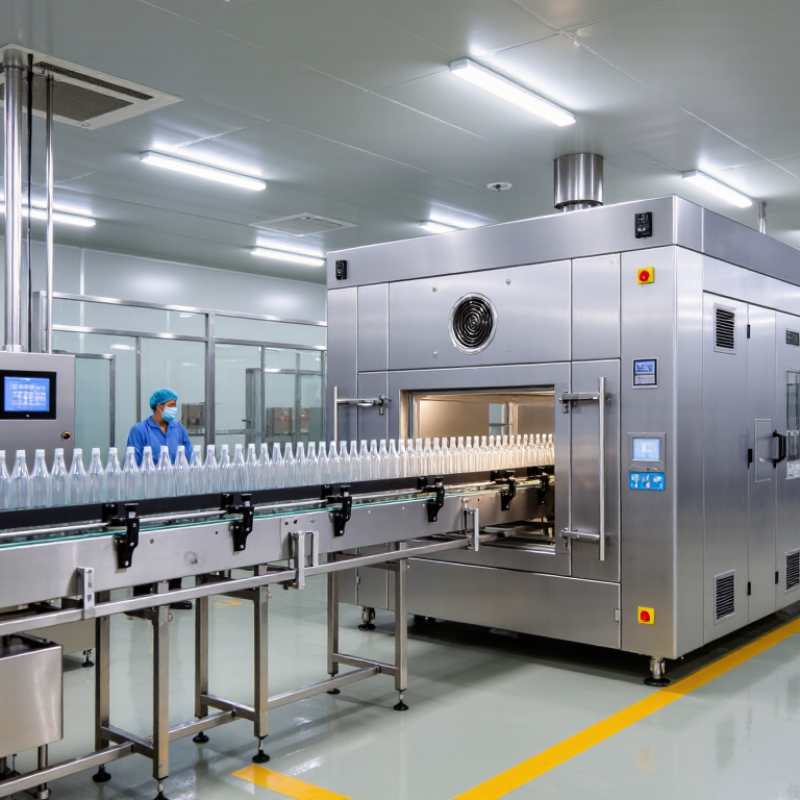
Top Bottle Sterilizing Systems for Global Buyers
For global buyers, choosing a Bottle Sterilizing System means balancing hygiene performance, production speed, and operating costs. The best fit depends on what the line processes, how bottles move through the plant, and how consistently each cycle can be controlled. A compact conveyor, for example, may suit a smaller facility, while a high-volume line needs dependable throughput and straightforward maintenance.
The stakes are significant. The World Health Organization’s 2015 report, Estimates of the Global Burden of Foodborne Diseases, estimated that 600 million people became ill and 420,000 died from contaminated food each year. Those figures cover foodborne disease broadly, not bottle contamination alone. Still, they underline why hygienic handling and validated processes matter. Buyers should examine how a supplier defines sterilization, what evidence supports performance claims, and whether the system can be monitored in routine production.
Look closely at temperature control, cycle records, bottle-material compatibility, changeover time, and service access. Ask for test results under conditions that resemble your actual line, not just ideal demonstrations. Confirm that installation, operator training, and maintenance support are available in your region. Standards and requirements can vary by product and destination market, so verify applicable guidance with qualified food-safety professionals. No system removes every risk. A careful selection process, supported by clear documentation and ongoing checks, gives buyers a more reliable basis for comparing suppliers.
How Bottle Sterilizing Systems Work
Bottle sterilizing systems use controlled heat or another validated process to destroy microorganisms on bottles. Many thermal units use saturated steam or hot water; some production lines use dry heat. The bottle interior, neck, and closure-contact surfaces must all receive adequate exposure. A cycle controls temperature and time, and steam systems also manage pressure. Small details matter.
Before sterilization, bottles are washed and rinsed. Soil or detergent residue can shield microorganisms and interfere with treatment. Operators load bottles with enough space for heat or steam to circulate, then run a programmed cycle. Sensors record conditions, while chemical or biological indicators can help verify performance. The right method depends on bottle material, shape, production volume, and whether bottles are empty or filled.
After treatment, controlled cooling and protected transfer help prevent recontamination. A warm bottle moved through a dusty area can lose the benefit quickly. Not every bottle fits. Plastic may deform under heat, while glass can crack after sudden temperature changes. Buyers should request documented cycle validation using their actual bottle and load pattern. A machine display alone is not proof; real production is messier than a neat test run.
Major Sterilization Technologies and Their Differences
Top Bottle Sterilizing Systems for Global Buyers
Steam systems use saturated steam to transfer heat across bottle surfaces. They can treat complex shapes, but heat-sensitive plastics may warp or lose clarity. Condensation and drying also affect line speed. Operators should check temperature distribution, exposure time, and bottle positioning during validation. Small gaps matter.
Hot-water systems circulate heated water over bottles or through a treatment chamber. They often suit containers that tolerate moisture and elevated temperatures. Their performance depends on even flow, water quality, and reliable temperature control. A blocked spray nozzle can leave a cool spot. That is easy to miss.
Chemical systems use approved sanitizing solutions, followed by controlled draining or rinsing where required. They can work at lower temperatures, but residue management and concentration checks need close attention. UV systems avoid liquid chemicals and can fit compact lines. Yet UV light reaches only exposed surfaces; deep threads and shaded areas may receive less energy. Bottle geometry matters. For global buyers, the right choice depends on material, throughput, utilities, and local validation requirements. A neat specification sheet can still mislead if it ignores changeovers, maintenance access, or actual bottle shapes. No system is effortless.
Bottle Materials, Production Capacity, and System Compatibility
Top Bottle Sterilizing Systems for Global Buyers
Bottle materials set the operating limits. Glass tolerates high-temperature processes, while PET and HDPE may deform if heat exceeds their resin specifications. Verify the bottle maker’s temperature limits before choosing steam, hot-water, chemical, or ultraviolet treatment.
Plastics Europe’s Plastics – the Fast Facts 2024 report estimates global plastics production at 413.8 million tonnes in 2023. That scale reflects diverse resin uses, not sterilization suitability; each bottle design still needs process validation. A small neck or deep shoulder can also affect spray coverage and UV exposure.
Match rated capacity to real production, not the largest number on a supplier’s sheet. Compare bottles per minute at your actual bottle size, conveyor spacing, and changeover frequency. Ask for test results using representative bottles, including the hardest-to-reach internal surfaces.
Check utilities, drainage, controls, and line interfaces, especially when equipment must connect across different factory layouts. A tidy capacity spreadsheet can still mislead. Peak demand and frequent format changes often reveal the difference.
Tips: Request a material compatibility matrix and a documented validation protocol. Test the full bottle, not just a flat sample. Leave room for future formats, but avoid paying for unused capacity. Better to question one assumption early than discover a mismatch after installation.
Safety, Compliance, and Performance Criteria for Global Buyers
Global buyers should compare validated performance, not headline cycle times. The CDC’s Guideline for Disinfection and Sterilization in Healthcare Facilities lists 121°C for 30 minutes in gravity steam cycles and 132°C for four minutes in prevacuum cycles for wrapped instruments. These are not bottle recipes; they show how load and cycle design affect exposure. Small details matter. A bottle shoulder, crowded rack, or cool spot may change the result.
For pharmaceutical packaging, ISO 11137-2 describes methods for establishing a 10⁻⁶ sterility assurance level for radiation-sterilized healthcare products. That target is not automatically right for every bottle or process. Buyers should request validation records, calibrated sensors, cycle-by-cycle data, and evidence that the chosen method suits the bottle material and intended use. No shortcut here. Check local requirements too, since one certificate may not satisfy every destination market.
Safety deserves the same scrutiny as microbiological performance. Review pressure-vessel safeguards, door interlocks, hot-surface protection, and any chemical-residue controls. Ask operators to show how they load the system and respond to alarms; paperwork alone can miss awkward handling steps. There is no universally best cycle, and I would not trust a supplier who treats one as universal. Test representative loads before purchase, including the most tightly packed configuration.
| System type | How it works | Best-fit applications | Key performance considerations | Safety and compliance checks | Buyer evaluation points |
|---|---|---|---|---|---|
| Moist-heat / steam system | Uses saturated steam or another validated moist-heat process to expose bottle interiors and, where designed, exteriors to heat. | Heat-resistant glass and compatible production containers; applications requiring a validated moist-heat process. | Heat distribution, air removal, load configuration, bottle geometry, drainage, and repeatable cycle control affect results. Process conditions must be established for the specific load. | Review pressure-vessel safeguards, interlocks, temperature and pressure monitoring, and documented process validation. ISO 17665 is a relevant reference for moist-heat sterilization of health-care products; food or beverage applications may have different requirements. | Confirm the system is designed for the container material and line speed. Request cycle records, calibration procedures, and evidence that the hardest-to-process bottle locations are included in validation. |
| Hot-water spray or immersion system | Circulates heated water over or around bottles. Depending on the validated process and intended use, it may provide thermal treatment or pasteurization rather than sterilization. | Applications using water-compatible containers and products where the required microbial reduction can be achieved with a controlled thermal process. | Water temperature, exposure time, spray coverage, water quality, and bottle spacing influence treatment uniformity. Wet surfaces and water carryover may require additional control. | Assess burn protection, guarding, water hygiene, drainage, and safe handling of hot surfaces. Do not describe a pasteurization process as sterilization unless the required sterility assurance has been established. | Check temperature uniformity across the conveyor or load, water-reuse controls, cleaning access, and compatibility with closures and downstream filling operations. |
| Dry-heat system | Uses heated air to treat bottles. Dry heat generally transfers heat less efficiently than moist heat, so time and temperature requirements depend on the validated process and load. | Heat-resistant containers and processes where a dry environment is preferred or required by the production design. | Airflow patterns, chamber uniformity, bottle orientation, and heating and cooling time can affect throughput and treatment consistency. | Review over-temperature protection, hot-surface guarding, ventilation, and documented temperature mapping. ISO 20857 is a reference standard for dry-heat sterilization of health-care products. | Request chamber mapping data under representative loading conditions. Verify that the process does not deform bottles, damage coatings, or exceed closure-material limits. |
| Chemical sterilant or disinfectant system | Applies a controlled chemical agent to bottle surfaces. The achievable microbial reduction depends on the agent, concentration, contact time, temperature, and surface coverage. | Selected packaging lines where thermal treatment is unsuitable and the chemical process is permitted for the intended product and market. | Coverage of bottle interiors, concentration control, contact time, rinsing or removal, and chemical compatibility must be verified. Residues can affect product safety or quality. | Review chemical approvals for the intended use, worker exposure controls, ventilation, wastewater handling, and residue limits. Follow the chemical supplier’s safety data and applicable local regulations. | Require validated concentration monitoring, residue testing where applicable, compatibility testing, and documented controls for chemical preparation, replenishment, and disposal. |
| UV-C treatment system | Uses ultraviolet-C radiation to reduce microorganisms on surfaces that receive an adequate dose. UV-C is a surface treatment and does not reliably reach shaded areas or surfaces blocked by the bottle material. | Supplementary treatment of exposed surfaces on suitable bottles, often as one step within a broader hygienic process. | Delivered dose depends on lamp output, distance, exposure time, bottle rotation, surface geometry, and lamp cleanliness. Opaque materials and shadows limit coverage. | Require light-tight guarding, safety interlocks, maintenance procedures, and controls that prevent worker exposure. Validate microbial reduction on representative bottle surfaces and configurations. | Check dose monitoring, lamp replacement criteria, conveyor speed controls, and whether the bottle interior and all critical surfaces are actually exposed. |
| Hybrid or multi-stage system | Combines two or more treatment steps, such as rinsing followed by thermal or chemical treatment, to meet process and line requirements. | High-throughput lines or applications with several container formats, where a single treatment method may not meet operational needs. | Performance depends on the validated sequence, transfer conditions, treatment uniformity, and control of cross-contamination between stages. | Evaluate each treatment stage and the integrated process. Applicable references may include ISO 14937 for general requirements for characterization of a sterilizing agent and development, validation, and routine control of a sterilization process; scope must be checked for the intended industry. | Ask for an integrated process flow, stage-by-stage monitoring plan, changeover validation, alarm history, and clear responsibility for validation and routine verification. |
| Procurement note: “Sterilization,” “disinfection,” and “pasteurization” are not interchangeable claims. Select a system against the required microbial outcome, bottle material, product risk, throughput, and destination-market rules. Validate the complete process with representative bottles and loads; standards and regulatory requirements depend on the industry and intended use. | |||||
| Cross-market documentation checklist | Request equipment specifications, process-flow diagrams, installation and operating instructions, calibration records, maintenance schedules, and validation or performance-test documentation appropriate to the application. | For food-contact applications, assess applicable requirements in each destination market, such as EU Regulation (EC) No 1935/2004 where relevant, as well as applicable national rules. A framework reference alone does not establish compliance. | Confirm electrical supply, language and labeling needs, local service capability, spare-parts availability, operator training, and acceptance-test criteria before purchase. | ||

Installation, Validation, and Ongoing Maintenance
Installing a bottle sterilizing system starts with the actual production space, not just the equipment drawing. Check floor capacity, door clearance, drainage, ventilation, and access for cleaning before delivery. Confirm that site utilities match the machine’s requirements, including water quality and electrical supply. Small details matter. A conveyor that fits on paper may still leave too little room for safe maintenance.
Validation should reflect the bottles, loads, and cycle conditions used in daily production. Map temperature across the chamber, paying attention to likely cold spots and crowded areas. Use calibrated instruments and document the test method, results, and acceptance criteria. Keep cycle records traceable. If bottle materials or load patterns change, reassess whether the validated process still applies. A checklist helps, though it cannot replace sound technical judgment.
Ongoing maintenance is easier when inspections follow a written schedule. Check seals for cracks, clear spray nozzles, inspect filters, and compare sensor readings with calibration records. Trend alarms and cycle data; a gradual change can reveal trouble before a shutdown. Train operators to report unusual noise, leaks, or slow cycle times. In practice, teams sometimes postpone minor repairs during busy shifts. That choice can be costly, so spare parts and service access should be planned before installation.