
What Are the Top 10 Physiotherapy Electric Machines?
Choosing a Physiotherapy Electric Machine is not simply a matter of comparing screens, settings, or price tags. The World Health Organization’s 2023 rehabilitation fact sheet estimates that 2.4 billion people live with conditions that may benefit from rehabilitation. That figure signals substantial need, but it does not prove that any one device improves outcomes. A machine’s value depends on the patient, the treatment goal, and the clinician’s judgment.
Professor Tim Watson, a widely cited electrotherapy educator, offers a useful principle in his teaching: choose a modality for its clinical purpose, not its novelty. This is a paraphrase, not a direct quotation. The distinction matters. Evidence, training, maintenance, and clear operating instructions deserve attention alongside advertised features. A device can look impressive under bright clinic lights and still be a poor fit for a particular service.
This guide compares ten common categories of physiotherapy electric machines, including TENS units, therapeutic ultrasound systems, and neuromuscular stimulators. It considers practical factors such as adjustability, portability, intended use, and ease of setup. These comparisons are not clinical recommendations or proof of equal effectiveness. Some product claims are difficult to compare fairly. That deserves scrutiny. The strongest choice is usually the one that fits a defined clinical need and can be used safely and consistently by trained staff.
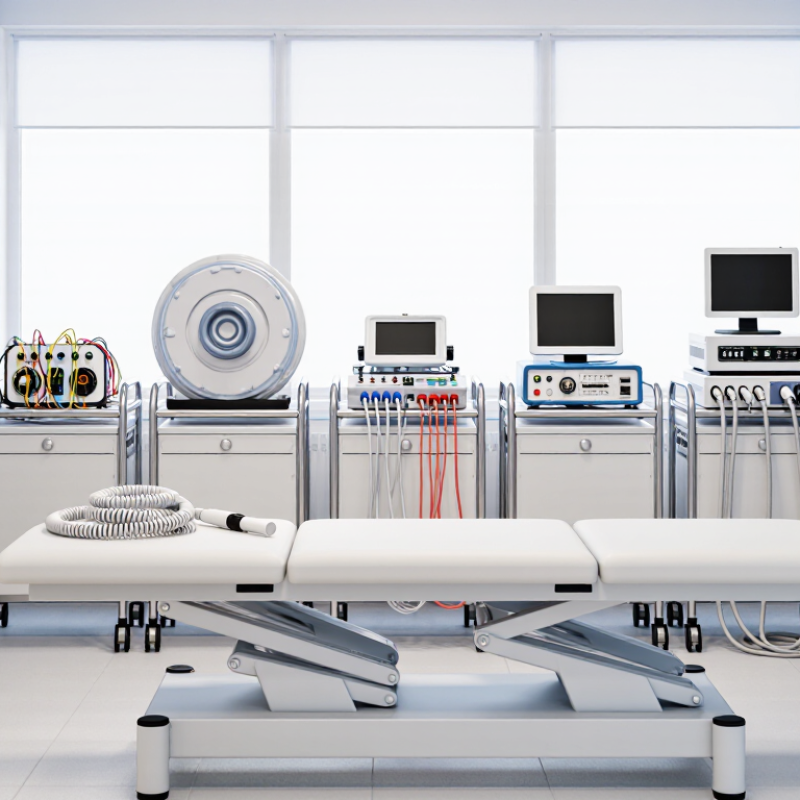
How Electrical Therapy Devices Support Physiotherapy
Electrical therapy devices can support physiotherapy by delivering controlled electrical currents to nerves or muscles. A therapist may use TENS to help manage pain or neuromuscular stimulation to prompt a muscle contraction. Other options include interferential current, microcurrent, and functional electrical stimulation. Each has a different purpose. The right choice depends on the person’s symptoms, goals, and assessment.
During treatment, electrodes are placed on clean, dry skin, and the intensity is adjusted to a tolerable level. Patients may feel a mild tingling or see a muscle twitch. Not a cure. Electrical stimulation works best as one part of a wider plan, alongside movement, strengthening, or hands-on care when appropriate. A device alone may not address why pain or weakness developed.
A physiotherapist should check medical history, skin condition, sensation, and any implanted electronic devices before treatment. They can monitor comfort and adjust electrode placement or settings as needed. Not every patient benefits. Responses vary, and research findings differ across conditions and treatment methods. It is useful to track whether a session makes daily tasks easier, rather than judging success only by how strong the sensation feels.
What Are the Top 10 Physiotherapy Electric Machines? — How Electrical Therapy Devices Support Physiotherapy
| No. | Device or Modality | How It Works | Common Physiotherapy Uses | Key Considerations |
|---|---|---|---|---|
| 1 | Transcutaneous Electrical Nerve Stimulation (TENS) | Delivers pulsed electrical current through surface electrodes to stimulate sensory nerves. | May be used as an adjunct for short-term pain relief during rehabilitation. | Electrode placement and intensity should be comfortable and appropriate to the person. Avoid placing electrodes over the front of the neck or across the chest; check device guidance and clinical precautions. |
| 2 | Neuromuscular Electrical Stimulation (NMES) | Uses electrical pulses to activate motor nerves and produce muscle contractions. | May support muscle re-education or strengthening when voluntary activation is limited, alongside active exercise where suitable. | Contraction intensity and electrode placement need individual adjustment. It is not a substitute for assessment or a progressive exercise programme. |
| 3 | Functional Electrical Stimulation (FES) | Applies timed electrical stimulation to help produce a task-related movement. | May assist selected functional activities, such as helping lift the foot during walking after certain neurological conditions. | Requires suitable fitting, timing and task-specific assessment. Results depend on the person’s condition, goals and ability to use the device. |
| 4 | Interferential Current (IFC) | Uses intersecting medium-frequency currents to create a lower-frequency amplitude-modulated effect in the treatment area. | Often used in clinical settings as an adjunct for pain management. | Evidence and response vary by condition. It should be selected based on an individual assessment rather than assumed to be more effective than other stimulation methods. |
| 5 | Russian-Current Stimulation | Uses burst-modulated medium-frequency current to stimulate motor nerves and produce muscle contraction. | May be used for muscle strengthening or re-education as part of a broader rehabilitation plan. | It is a form of electrical muscle stimulation, not a distinct guarantee of better results. Comfortable, strong contractions and appropriate exercise progression matter. |
| 6 | High-Voltage Pulsed Current (HVPC) | Delivers brief, high-voltage pulsed electrical waveforms through surface electrodes. | May be used by clinicians in selected cases, including some wound-care or pain-management protocols. | Use depends on the clinical goal, skin condition and applicable care protocol. Wound treatment requires appropriate assessment and infection-control practice. |
| 7 | Microcurrent Stimulation | Delivers very low-intensity electrical current, often below the level of sensation. | Sometimes used as an adjunct for pain or tissue-related treatment goals. | Research findings vary, and the person may not feel the current. It should not replace established assessment, exercise or other indicated care. |
| 8 | Iontophoresis Unit | Uses direct electrical current to help move an appropriately prescribed charged medication through the skin. | May be considered for localized medication delivery in selected conditions. | Requires a suitable medication and trained clinical oversight. Skin irritation or burns can occur; medication allergies and device instructions must be checked. |
| 9 | Therapeutic Ultrasound Unit | Produces high-frequency sound waves in tissue; it is electrically powered but does not deliver electrical current to the patient. | Used in some settings as an adjunct for selected soft-tissue treatment goals. | Clinical benefits are condition-dependent and may be limited. Treatment settings, movement of the applicator and contraindications require appropriate training. |
| 10 | Shortwave Diathermy Unit | Uses radiofrequency electromagnetic energy to produce heating in tissues, depending on the method and settings. | May be used for therapeutic heating in selected musculoskeletal cases. | Careful screening is essential, including for implanted electronic devices and metal in or near the treatment area. Follow equipment guidance and local clinical protocols. |
Note: This is a practical overview, not a ranking of effectiveness. Suitability depends on the diagnosis, treatment goals, medical history and device instructions. A qualified physiotherapy professional should determine whether a modality is appropriate.