Best Skincare Pump for Wholesale Buyers in 2026?
Choosing the best Skincare Pump for wholesale in 2026 means looking beyond appearance. The pump affects product hygiene, dispensing accuracy, shelf appeal, and the customer’s daily experience. A sleek collar can catch attention. Still, it cannot compensate for a pump that leaks during shipping or struggles with a thick cream.
Wholesale buyers should compare pump output, compatibility, closure style, material options, and supplier consistency. Match the mechanism to the formula: a lightweight serum may need a different dose and actuator from a rich lotion. Request samples and test them with the actual product. Check priming, spray or stream quality, residue, and how the pump performs after repeated use. Small details matter. A few frustrating presses can change how a product feels.
This guide explores practical options for different skincare formats and buying priorities. It also considers minimum order quantities, customization, sample timelines, and quality-control questions worth asking suppliers. Confirm specifications in writing, including dimensions, output per stroke, and packaging tolerances. For larger orders, assess whether production samples represent the finished batch. That step is easy to overlook. It is not a guarantee, either. Pump performance can vary with formula viscosity, filling conditions, and storage, so test under realistic conditions before committing. No single pump suits every product or budget. The right choice balances user experience, reliable supply, and the needs of the specific formula.
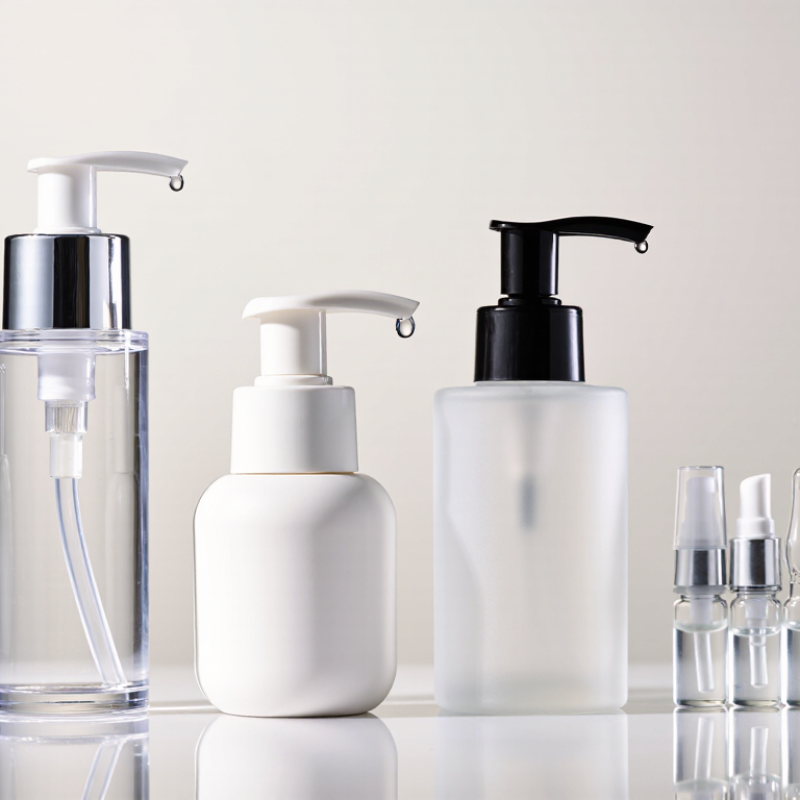
Understanding Skincare Pump Types and Their Main Components
For wholesale buyers in 2026, choosing a skincare pump starts with understanding how its parts work together. A lotion pump typically uses an actuator, closure, dip tube, piston, spring, and dispensing chamber. Pressing the actuator moves product through the chamber and nozzle. Small parts matter. A poorly matched dip tube can leave product behind, while a stiff actuator may frustrate users.
Treatment pumps are designed for smaller, controlled doses, often for serums or lightweight lotions. Airless pumps use a moving piston or pouch to push product upward, helping limit repeated air exposure. Their internal design varies, so confirm how much product remains at the end of use.
Mist pumps create a fine spray through a narrow nozzle and work best with suitable, low-viscosity formulas. Not every liquid sprays evenly.
Before requesting a bulk quote, test the pump with the actual formula, bottle, and closure. Check dose consistency, leakage, priming, and how the pump performs after repeated presses. Ask for component material details and sample specifications. I would not judge a pump by appearance alone. A sleek actuator can hide a poor fit. Bench tests can help, though they may not fully predict behavior during transport or long-term storage.
Matching Pump Design to Skincare Formula and Packaging
Best Skincare Pump for Wholesale Buyers in 2026?
Matching Pump Design to Skincare Formula and Packaging
Choosing a skincare pump starts with the formula, not the shelf appearance. Thin serums usually need a controlled, low-output pump to reduce drips. Rich creams may need a wider passage and stronger spring action. Oils can expose weak seals or cause slippery residue around the actuator. Small details matter. Check whether the pump materials suit the formula, then test samples through repeated use. A pump that works once may clog, leak, or dispense unevenly after storage.
Packaging matters just as much. Match the pump’s neck finish to the bottle, and confirm that the dip tube reaches the bottom without curling. For air-sensitive formulas, an airless design may help limit contact with incoming air, but it still needs formula-specific testing. Compare output per stroke, priming time, and the force needed to press the actuator. These details affect both customer use and filling-line performance. A polished sample can still disappoint in bulk; that is easy to overlook.
Tips: Test filled samples upright, sideways, and after several actuations. Record leakage, dose consistency, and pump effort. Test before ordering. If the formula changes during development, repeat compatibility checks rather than relying on an earlier result. The extra step takes time, but discovering a mismatch after production takes more.
Evaluating Performance, Materials, and Quality Standards
A skincare pump should deliver a steady dose from the first press to the last. For wholesale buyers, test samples with the actual lotion or serum, not water alone. A thick cream may prime slowly, while a watery formula can leak around the collar. Check output consistency, rebound, and whether the actuator locks securely during shipping. Small annoyances become costly across thousands of units.
Tips: Record dose per stroke, priming presses, and leakage after storage. Ask suppliers for material specifications and batch inspection records. Compare pump components with your formula; contact time can affect seals and springs.
Material choice deserves close attention. Polypropylene and polyethylene are common options, but suitability depends on the product and packaging design. Request compatibility testing, plus documented checks for repeated pressing, drop handling, and temperature changes. Quality certificates can support evaluation, but they do not replace testing of the finished package. A clear acceptance checklist helps teams compare suppliers fairly. I would also keep a few samples for follow-up checks; teams sometimes overlook changes after long storage. No test catches everything, and that limitation should be stated plainly.
Comparing Wholesale Costs, Minimum Orders, and Supplier Capacity
A wholesale skincare pump quote only matters when the specifications match. Compare the same neck finish, dose output, material, dip-tube length, and decoration. Ask suppliers to separate unit price, tooling, samples, freight, and inspection costs. Small orders may carry higher unit costs. Large orders can tie up cash and storage space. Check the minimum order for each component, not just the finished pump. A printed bottle may have a different threshold from a standard pump. Details matter.
Supplier capacity needs evidence. Request monthly output for the exact pump type, current lead time, and a production schedule showing peak-season limits. Ask whether backup tooling and critical components are available. Then test samples with your actual formula; a pump that dispenses well with water may clog or leak with a thicker serum. OECD’s Global Plastics Outlook reports that only 9% of plastic waste was recycled in 2019. That is not a pump-specific figure, but it makes resin choice and packaging weight worth checking. Cosmetics Europe reported European cosmetics retail sales of €96 billion in 2023, signaling a substantial market, not a guarantee of demand for any single buyer. I would still avoid choosing solely by price. Sometimes I miss this myself: a low quote can hide costly rework.
Selecting a Skincare Pump for 2026 Market and Brand Needs
Best Skincare Pump for Wholesale Buyers in 2026?
Selecting a Skincare Pump for 2026 Market and Brand Needs
Choosing a skincare pump means matching the package to the formula, user, and production plan. Grand View Research valued the global cosmetic packaging market at USD 34.8 billion in 2023, with projected growth of 5.7% annually from 2024 to 2030. The figure covers more than pumps, but it signals a competitive packaging market. Small details matter.
Start with the formula’s texture and dispensing needs. A lightweight serum may work with a fine, controlled dose, while a richer cream may need a wider passage and stronger actuator. Check output consistency, priming, leakage, and formula compatibility using filled samples—not empty display pieces. Fit matters. Test it.
For wholesale orders, also review component availability, assembly speed, and shipping performance. Ask suppliers for documented testing and clear material specifications. Airless designs can help limit exposure to air, but they may add cost and complicate material separation. A sleek sample is not proof of dependable production; that is easy to overlook. Compare several pump options with the actual formula, then test samples after transport and repeated use. The best choice is the one that works reliably at scale, even if its appearance is less dramatic.
Best Skincare Pump for Wholesale Buyers in 2026?
Selecting a Skincare Pump for 2026 Market and Brand Needs
Example target doses help match pump output to product use: lower-dose pumps suit serums, while higher-dose options may suit cleansers and body lotions. These are illustrative engineering targets, not market averages; confirm dose, formula compatibility, and packaging dimensions with your supplier.