
Top 10 Best Smart Exercise Bikes for Home Workouts?

A Smart Exercise Bike can make indoor training feel more engaging, but the best choice depends on how you ride. Some people want instructor-led classes and a bright touchscreen. Others prefer quiet resistance changes, simple controls, and a compact frame that fits beside a sofa. Small details matter. A bike that looks impressive online may feel awkward if its seat does not adjust to your height or its screen is hard to read.

This guide to the top 10 best smart exercise bikes for home workouts compares practical features, not just polished marketing claims. It considers resistance types, adjustment range, footprint, connectivity, training options, and the costs of any required subscription. It also looks at details you notice during everyday use: whether the pedals feel secure, the display is easy to follow, and the bike can be moved without a struggle. Check each model’s current specifications, warranty, and app requirements before buying, since these can change.

There is no single best bike for every home. A connected model may help riders who enjoy coached sessions and progress tracking, while a basic setup may suit someone who simply wants to pedal after work. And more features do not always mean a better workout. This roundup aims to clarify those trade-offs and help you match a bike to your space, budget, and routine. One limitation remains: online comparisons cannot fully reproduce the feel of a ride, so comfort deserves a careful second look.
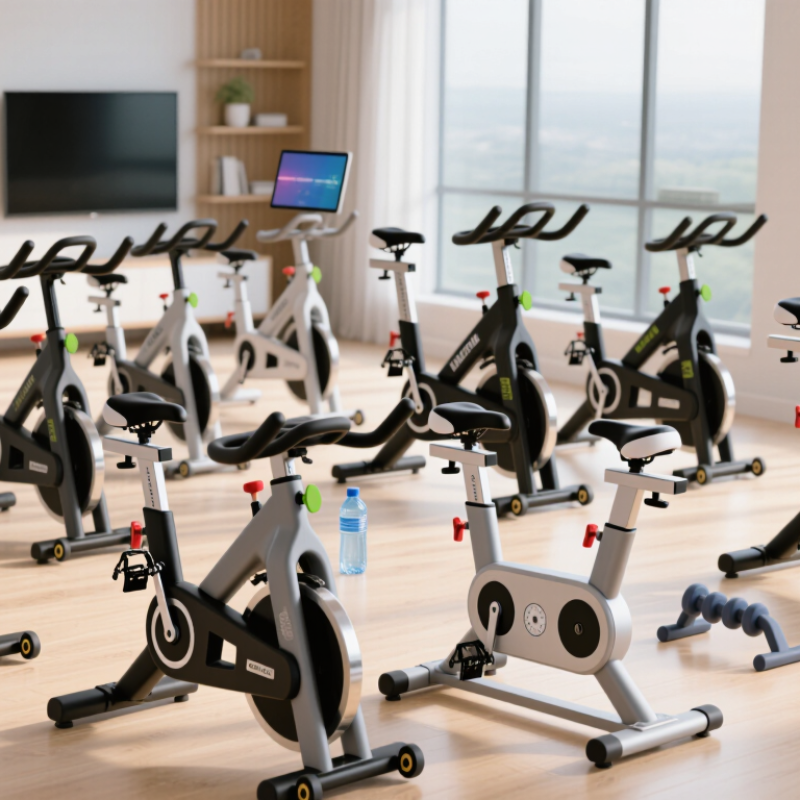
Top 10 Best Smart Exercise Bikes for Home Workouts?

What Makes an Exercise Bike Smart?

A smart exercise bike does more than display speed and time. It links sensors, software, and resistance controls to make each ride measurable. During a steady 20-minute session, it may track cadence, estimated power, heart rate, and distance. Those numbers help compare efforts, though calorie estimates are rough. The useful detail is how clearly the bike explains its data. Can you see cadence without leaning over? Does resistance change smoothly when a workout calls for a harder climb?

Good smart features support training rather than distract from it. A screen might guide intervals, record progress, or offer coaching cues. Connected sensors can also help keep effort within a chosen range. Before buying, check whether the bike supports common heart-rate sensors and whether workouts remain accessible without a subscription. Also consider setup. A loose pedal or poorly placed screen can make a polished interface frustrating. Smart does not mean effortless. Connectivity can drop, and a guided class may not match your energy on a tired day. Even useful metrics can become noise if you watch the display more than your breathing. A dependable bike should offer manual control and a clear ride history.

How Smart Exercise Bikes Support Home Workouts

A smart exercise bike can make home workouts easier to plan and repeat. Cadence, resistance, and heart-rate readings offer immediate feedback while you pedal. That can help riders keep an easy recovery session easy, or make a short interval workout more deliberate. Small cues matter: a steady cadence, a towel beside the handlebars, and a resistance setting you can find again next week. No commute required.

The World Health Organization recommends that adults get 150–300 minutes of moderate-intensity aerobic activity each week. A bike can help divide that target into manageable sessions, such as three 20-minute rides and a longer weekend workout. The American College of Sports Medicine’s 2024 Worldwide Survey of Fitness Trends ranked wearable technology first. That points to strong interest in tracking, not proof that connected equipment automatically improves fitness. Numbers can mislead, too. Heart-rate readings vary, and estimated calorie counts are not precise. Use them as guides, not grades. Consistency still takes effort, and a screen cannot supply motivation every day. On tired evenings, a simple, comfortable ride may be more useful than chasing a perfect score.

Key Features to Compare Before Choosing a Bike

When comparing smart exercise bikes, start with fit, resistance range, and ride feel—not screen size. Check whether the saddle and handlebars adjust enough for your height, and whether resistance changes smoothly during intervals. Fit matters more. A bike that rocks on a hard sprint or clicks with each pedal stroke can make daily workouts less appealing.

Connectivity deserves close inspection. ACSM’s 2025 Worldwide Fitness Trends report ranked wearable technology first and mobile exercise apps second among its 45 fitness trends. That signals strong interest in tracking and app-based training, but it does not prove every connected feature improves a workout. Check whether the bike records cadence, power, and heart rate, and whether those figures sync with your preferred devices. Also confirm what remains usable if a subscription ends.

Look beyond the display. Measure floor space, listen for operating noise, and check the weight limit and warranty terms. If possible, test the pedals and seat for at least several minutes; a quick showroom spin may not reveal discomfort after half an hour. I would treat impressive power numbers cautiously, too. Different bikes may calculate them differently, so comparisons can be imperfect. A clear return policy matters when you cannot test the bike at home first.

Top 10 Best Smart Exercise Bikes for Home Workouts? - Key Features to Compare Before Choosing a Bike Ranked by use case. These are bike categories, not specific products; features and specifications vary by model.
Rank Bike Type Resistance & Adjustment Smart Features to Look For Best Suited For Main Advantage Trade-Off to Consider
1 Connected studio bike Usually magnetic resistance, adjusted by a manual knob or electronic controls. Built-in display or tablet support, workout metrics, and app or class access; check whether a membership is required. Riders who want guided classes and an all-in-one workout setup. Combines structured instruction with live workout feedback. May involve recurring fees; screen and connected features can increase cost.
2 Screenless app-connected bike Commonly magnetic resistance with manual adjustment. Bluetooth connectivity, cadence data, and compatibility with a phone or tablet; power measurement may be model-dependent. Riders who already own a device and prefer choosing their own training apps. Often offers a simpler setup without paying for a built-in display. App compatibility and the accuracy or availability of workout metrics vary.
3 Power-measuring indoor cycle Typically magnetic resistance; some models adjust resistance electronically. Look for measured power in watts, cadence, Bluetooth or ANT+ support, and a stated calibration method. Structured training, interval work, and riders tracking performance over time. Power data can help make training intensity more measurable. Power accuracy and consistency depend on the measurement system and calibration.
4 Auto-resistance training bike Electronically controlled resistance that can change during compatible workouts. Confirm that the bike, app, and workout program support automatic resistance control together. Riders following coached sessions or interval workouts with changing effort targets. Resistance changes can follow a workout without constant manual adjustment. Automatic control may be limited to selected apps or workout modes.
5 Quiet magnetic-resistance bike Magnetic resistance, which generally avoids the direct pad-to-flywheel contact used by friction systems. Check for Bluetooth data, cadence tracking, and the ability to use a separate screen or device. Home workouts where lower operating noise is a priority. Magnetic systems are often a practical choice for quieter indoor use. Noise also depends on the drivetrain, assembly, floor, and maintenance.
6 Incline-and-decline simulator bike May combine electronically controlled resistance with a frame that changes riding angle. Verify which workouts control the incline and whether resistance and angle changes are automatic. Riders seeking a more varied, terrain-style indoor workout. Can add changes in riding position and effort beyond resistance alone. Moving parts and larger frames may require more space and maintenance.
7 Recumbent smart bike Often uses magnetic resistance with a reclined seat and back support. Look for clear display readouts, accessible controls, and connectivity if app tracking is needed. Riders who prefer a supported seated position for low-impact exercise. Reclined seating and a backrest can feel more supportive for some users. It has a different riding position and training feel from an upright studio cycle.
8 Upright bike with basic connected console Usually magnetic resistance with straightforward manual or console-based adjustment. Compare the console’s available metrics, heart-rate sensor support, and wireless connectivity. Everyday cardio and riders who want a conventional upright position. Simple controls and familiar positioning can suit regular home use. Some consoles provide only basic metrics or limited app integration.
9 Air-resistance bike with performance console Fan-based resistance increases as pedaling effort and speed rise. Check for cadence, interval tracking, heart-rate compatibility, and workout-history features. High-effort intervals and full-body workouts when the bike includes moving handles. Resistance responds directly to how hard and fast the rider pedals. The fan can be louder than many magnetic-resistance systems.
10 Compact foldable bike with basic tracking Resistance and adjustment mechanisms vary; inspect stability and the range of resistance settings. Some models offer basic electronic tracking; confirm whether Bluetooth or app support is actually included. Light cardio in homes where storage space is limited. Can be easier to store than a full-size indoor cycle. Foldable designs may have fewer smart features and a less studio-like riding feel.

Comparison tip: Before choosing, check fit adjustments, maximum user weight, footprint, warranty, connectivity compatibility, and any subscription costs. Features listed are common options within each category, not guarantees for every model.

Ten Smart Exercise Bikes for Home Workouts

A useful shortlist of ten smart exercise bikes should reflect different homes and training habits. Consider compact folding bikes for tight rooms, upright bikes for familiar posture, and recumbent bikes for supported seating. Belt-drive and magnetic-resistance designs can feel smoother and quieter. Other options include automatic resistance bikes, screen-equipped bikes, tablet-compatible bikes, bikes with guided classes, models with built-in workout tracking, and sturdy bikes designed for frequent use. These features overlap, so a long feature list does not always mean a better ride.

Check fit before comparing screens or subscription features. Your knees should stay slightly bent at the pedal’s lowest point, and the handlebars should feel reachable without rounding your back. A stable frame matters during hard intervals; a wobbling bike can quickly become annoying. Look for clear resistance controls, a readable display, and a seat that adjusts easily. Smart metrics can help track consistency, but calorie estimates are rough, not medical measurements. I would not pay extra for features I rarely use. That judgment can change after a few weeks.

Tips: Measure the bike’s footprint and ceiling clearance before buying. Test the seat and pedal position if possible. Keep a towel nearby, and leave room to step off safely. A quiet bike is helpful, but floor vibration may still travel in an apartment. Start with manageable sessions. Check comfort again after your first rides.

How to Match a Bike to Your Space, Goals, and Budget

Before comparing smart exercise bikes, measure the space you can actually use. Include room for mounting, dismounting, and moving the handlebars safely. A bike may fit on paper but feel cramped beside a sofa or desk. Check its footprint, ceiling clearance, and whether it folds or rolls. Also consider noise: a quiet ride matters when someone is working or sleeping nearby.

Match the bike’s features to your routine, not an imagined one. If you want steady cardio, adjustable resistance and a comfortable saddle may matter more than live classes. For structured training, look for clear performance data, reliable connectivity, and workouts that suit your fitness level. New riders may benefit from simple controls. Keep it simple. Advanced metrics can be useful, but only if you understand them and use them consistently.

Set a budget that includes more than the bike itself. A screen, mat, floor protection, or optional membership can change the real cost. Compare warranty terms and check which features continue working without a subscription. If possible, test the riding position; knee discomfort can appear after only a short session. I would not pay extra for every feature. Still, choosing the cheapest option can be a false saving if it feels unstable or uncomfortable. A little hesitation here is reasonable.

Article Source: