
10 Best Disposable Plate Manufacturers for Global Buyers
Choosing the right Disposable Plate Manufacturer requires more than comparing prices and product photos. Global buyers must examine materials, production capacity, food-contact documentation, and delivery reliability. A plate can look sturdy on a sample table yet soften under hot curry, sauces, or prolonged catering service. That practical gap matters.
The OECD’s Global Plastics Outlook reports that global plastic waste reached 353 million tonnes in 2019, with packaging representing about 40% of total use. Meanwhile, UNEP’s Turning off the Tap report states that plastic pollution could be reduced by 80% by 2040 through reuse, recycling, and better product design. These findings explain why buyers increasingly evaluate paper, molded fiber, bamboo, and compostable options. However, “eco-friendly” remains an incomplete claim. Certification scope, coating chemistry, local waste systems, and actual disposal conditions must be checked carefully.
This guide reviews 10 Best Disposable Plate Manufacturers for Global Buyers. It considers manufacturing experience, material consistency, customization, quality controls, export capability, and sustainability evidence. Standards such as ISO 9001, BRCGS, FDA food-contact requirements, and relevant EU regulations may support supplier assessment, but certificates should be verified directly. Reports often present different market figures. That is worth acknowledging. Market estimates depend on definitions, regions, and whether related tableware is included. Therefore, this selection focuses on practical purchasing signals, not inflated rankings. Buyers should request recent test reports, production samples, carton specifications, and transparent lead-time commitments before placing large orders. Small details expose big risks.
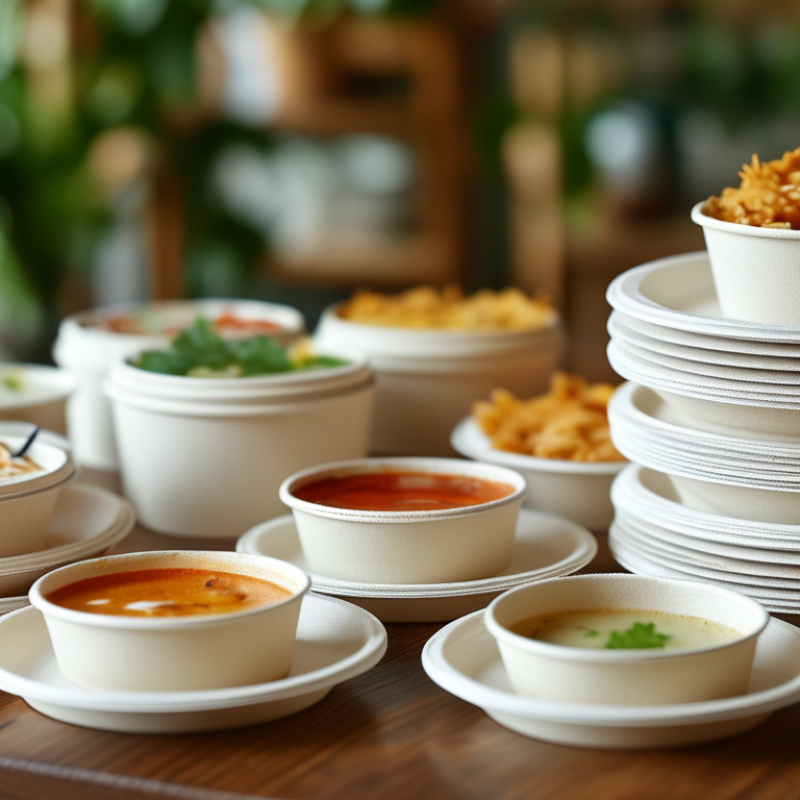
Disposable Plate Manufacturing: Materials, Processes, and Product Types
Disposable plate manufacturing starts with material selection, not decoration. Paperboard plates offer a light structure and smooth printing surface. Bagasse, made from sugarcane fiber, provides a molded, natural texture. Bamboo and palm-leaf materials create firmer products, but their surface consistency can vary. Plastic plates, such as polypropylene types, resist moisture and heat well. However, buyers must check local recycling rules and food-contact requirements.
The process changes with each material. Paper plates are usually die-cut, formed, and treated with a moisture barrier. Some coatings improve performance but may complicate recycling. Fiber plates require pulping, cleaning, molding, pressing, and controlled drying. Thermoformed plates begin as heated plastic sheets, then take shape inside precision molds. During production, reliable factories monitor plate weight, rim strength, moisture resistance, and stacking accuracy. Small defects matter. A weak rim can collapse under hot food.
Product types include flat dinner plates, sectioned meal trays, deep soup plates, and compartment plates for catering. Buyers should compare diameter, depth, nesting space, and package count. I have found that visual quality alone can mislead. A clean surface does not prove strong performance. Test samples with oily food, boiling water, and several minutes of handling. Results may differ between laboratory tests and busy service conditions. “Compostable” also needs careful verification, because industrial composting access is not universal. Clear specifications, batch records, and independent testing make supplier comparisons more dependable.
10 Best Disposable Plate Manufacturers for Global Buyers - Disposable Plate Manufacturing: Materials, Processes, and Product Types
Manufacturing capability comparison by material, production process, product application, and purchasing considerations
| No. | Primary Material | Main Manufacturing Process | Typical Product Types | Key Functional Advantages | Best-Fit Applications | End-of-Life Considerations | Buyer Quality Checkpoints |
|---|---|---|---|---|---|---|---|
| 1 | Polypropylene (PP) | Injection molding or thermoforming of PP sheet | Reusable-style disposable plates, compartment plates, microwaveable food-service plates | Good impact resistance, relatively high heat tolerance, low moisture absorption, and light weight | Hot meals, catering, takeout, institutional food service | Technically recyclable in many systems, but acceptance depends on local collection and sorting infrastructure | Food-contact compliance, microwave instructions, rim strength, warpage, leakage, and recycled-content documentation |
| 2 | Polystyrene (PS) | Injection molding or sheet extrusion followed by thermoforming | Lightweight flat plates, snack plates, dessert plates | Low cost, clean appearance, easy forming, and good dimensional consistency | Cold foods, desserts, short-duration events, budget catering | Recycling availability is limited in many regions; local restrictions should be checked before import | Brittleness, cracking under load, food-contact approvals, regulatory restrictions, and minimum order quantity |
| 3 | Expanded Polystyrene (EPS) | Foam bead expansion followed by steam molding | Foam plates, insulated meal trays, lightweight catering plates | Very light weight, thermal insulation, cushioning, and low material usage | Cold foods, short-term catering, takeaway meals where legally permitted | Frequently restricted or difficult to recycle because of low density and contamination; regulations vary by market | Destination-country legislation, foam density, cracking, food-contact certification, and packaging compression |
| 4 | Polyethylene Terephthalate (PET) | PET sheet extrusion followed by thermoforming | Clear or translucent plates, cold-food trays, presentation plates | Excellent clarity, good stiffness, strong moisture barrier, and attractive presentation | Salads, fruit, bakery items, desserts, and chilled ready-to-eat foods | Widely recyclable in established PET systems, subject to color, coating, contamination, and local collection rules | Clarity, crack resistance, seal or coating compatibility, food-contact compliance, and temperature limitations |
| 5 | Paperboard with PE or Water-Based Coating | Paperboard die-cutting, folding, pressing, and surface coating or lamination | Round plates, compartment plates, printed promotional plates | Printable surface, efficient nesting, low shipping weight, and customizable shapes | Events, restaurants, parties, bakery service, and branded food presentation | Fiber recycling may be reduced by plastic, wax, or barrier coatings; compostability requires verified certification and suitable facilities | Basis weight, coating type, wet strength, oil resistance, print migration, stacking stability, and certification documents |
| 6 | Sugarcane Bagasse Fiber | Pulping, slurry preparation, hot pressing, drying, and trimming | Molded-fiber plates, three-compartment plates, deep meal plates | Rigid structure, grease resistance, natural appearance, and good suitability for hot foods | Takeout meals, catering, institutional dining, and environmentally focused food service | Often designed for commercial composting, but actual compostability depends on coatings, additives, certification, and local facilities | Fiber purity, moisture and oil resistance, edge integrity, odor, mold prevention, compostability certification, and nesting ratio |
| 7 | Bamboo or Other Wood-Pulp Fiber | Fiber pulping, wet forming, hot pressing, drying, and die trimming | Molded-fiber plates, premium serving plates, compartment trays | Good rigidity, textured natural appearance, and compatibility with molded-fiber designs | Premium catering, hospitality, events, and food-service applications requiring a natural look | Recyclability and compostability depend on fiber source, additives, coatings, certification, and municipal processing capability | Responsible fiber sourcing, pulp composition, chemical additives, water resistance, food-contact testing, and dimensional consistency |
| 8 | Areca Palm Leaf | Collected leaf sheath cleaning, heat pressing, trimming, and sterilization | Natural leaf plates, rustic serving plates, bowls, and trays | Distinctive natural texture, chemical-free appearance when properly processed, and rigid construction | Outdoor events, premium presentation, catering, and natural-themed hospitality service | Generally suitable for biodegradation or composting when untreated, but local conditions and product certification should be verified | Sterilization process, moisture content, odor, surface cleanliness, thickness variation, pest control, and breakage rate |
| 9 | Polylactic Acid (PLA) | PLA sheet extrusion and thermoforming, or injection molding for selected designs | Clear cold-food plates, molded compostable plates, and presentation trays | Plant-derived feedstock option, clear appearance, and good performance for cold or moderate-temperature foods | Salads, desserts, fruit, chilled foods, and sustainability-oriented events | Usually requires controlled industrial composting; it does not necessarily compost in home or natural environments | Heat distortion behavior, compostability standard, coating composition, transparency, food-contact compliance, and labeling accuracy |
| 10 | Aluminum Foil | Aluminum sheet rolling, stamping, forming, edge curling, and trimming | Roasting plates, oven-ready trays, catering platters, and meal containers | Strong barrier against light, oxygen, moisture, and grease; suitable for oven applications when specified | Baking, roasting, food delivery, airline catering, and heat-intensive food service | Highly recyclable where collection systems exist; recycling performance is affected by food contamination and local sorting practices | Alloy and thickness, pinholes, edge safety, deformation resistance, oven-use instructions, and food-contact documentation |