| 1 | Manual hex implant screwdriver | Routine placement and restorative screw tightening where a calibrated torque wrench is used separately | Standard contra-angle or hand-driver shank | Hex 0.9 mm, 1.0 mm, 1.2 mm, 1.25 mm, and 1.27 mm, depending on the implant system | Medical-grade stainless steel; hardened driver tip | Final torque must be applied with a compatible calibrated torque wrench; commonly used ranges are 15–35 N·cm, system dependent | Reusable; steam autoclave compatibility should be confirmed in the IFU | EU Declaration of Conformity, MDR classification rationale, IFU, sterilization instructions, and material declaration | Commonly 12 months against manufacturing defects; wear and misuse normally excluded | Low-cost and easy to source; confirm exact hex geometry before ordering | ★★★★★ |
| 2 | Torque-wrench-compatible implant driver | Controlled tightening of abutment and prosthetic screws | ISO-compatible torque-wrench connection or manufacturer-specific connection | Hex, square, or star profiles; size must match the implant screw head | Stainless steel shaft with hardened stainless-steel tip | Designed for use with a calibrated wrench; typical clinical settings range from 15–45 N·cm according to the implant system | Reusable and commonly steam-sterilizable when validated by the manufacturer | EU Declaration of Conformity, IFU, validation of reprocessing, technical data sheet, and traceability information | Usually 12–24 months; calibration of the separate torque wrench is not generally covered | Best for clinics requiring repeatable torque control and documented workflows | ★★★★★ |
| 3 | Long-shank implant screwdriver | Posterior restorations and access through deep or restricted surgical fields | Handpiece shank or torque-wrench adapter | Common hex sizes from 0.9 mm to 1.27 mm; length often 20–35 mm | Medical-grade stainless steel; corrosion-resistant finish | Use only within the torque limit specified for the compatible screw and driver | Reusable; autoclave parameters must follow the supplied IFU | Declaration of Conformity, IFU, cleaning and sterilization validation, and dimensional specification | Typically 12 months for material and workmanship defects | Useful for limited access, but longer shafts may flex under excessive force | ★★★★☆ |
| 4 | Short-shank implant screwdriver | Anterior restorations and procedures where precise tactile control is important | Manual handle or compact torque-wrench connection | Hex or star profile selected according to the prosthetic screw design | Stainless steel shaft with an autoclavable polymer or metal handle | Final tightening should be performed with a calibrated torque wrench when specified by the implant manufacturer | Reusable; steam sterilization is common for metal instruments | EU Declaration of Conformity, IFU, material safety information, and reprocessing instructions | Commonly 12 months; cosmetic damage and normal tip wear may be excluded | Compact format improves control and storage efficiency | ★★★★☆ |
| 5 | Multi-system interchangeable driver kit | Dental laboratories, distributors, and clinics handling multiple implant connections | Replaceable tips with a universal handle or torque-wrench adapter | Multiple hex, star, and square tips; verify each tip by connection and size | Stainless steel tips; autoclavable stainless steel or high-temperature polymer case | Torque depends on the selected tip and screw system; do not exceed the lowest rated component | Tips are often reusable; case sterilization suitability varies by construction | Declaration of Conformity covering the complete kit, IFU, component list, and sterilization validation | Typically 12 months for the kit; individual tips may be treated as replaceable wear components | Reduces inventory complexity but requires strict tip identification and segregation | ★★★★☆ |
| 6 | Angled implant screwdriver | Angulated access channels and restorations with difficult line-of-sight | Angled head with compatible manual or torque-wrench connection | Usually hex or star profiles; angle and clearance must match the restoration | Medical-grade stainless steel; reinforced joint or fixed angled head | Use only at the manufacturer-specified angle and torque; excessive angulation can damage the screw head | Reusable only when the joint and reprocessing method are validated | EU Declaration of Conformity, IFU, bending-load limitations, reprocessing instructions, and dimensional drawings | Commonly 12 months; damage caused by lateral loading is normally excluded | Improves access but usually costs more and requires careful inspection after sterilization | ★★★★☆ |
| 7 | Laboratory implant screwdriver with ergonomic handle | Bench work, framework adjustment, and prosthetic component assembly | Manual handle with fixed or replaceable driver tip | Hex and star tips selected for the laboratory’s implant portfolio | Stainless steel tip with anodized aluminum, stainless steel, or autoclavable polymer handle | Generally intended for hand tightening unless a torque-wrench interface is expressly provided | May be reusable or limited to non-sterile laboratory use; confirm product labeling | Declaration of Conformity when marketed as a medical device, material declaration, and cleaning instructions | Typically 12 months; non-sterile laboratory products may have different terms | Good handling comfort and low purchase cost; not automatically suitable for surgery | ★★★★☆ |
| 8 | Micro implant screwdriver | Small-diameter prosthetic screws and narrow restorative components | Precision manual handle or small torque-wrench adapter | Small hex or star profiles, often below 1.0 mm | Fine-finished stainless steel with precision-machined tip | Low-torque applications; exact torque must be taken from the compatible implant system documentation | Reusable only when validated; small tips require careful inspection for deformation | Declaration of Conformity, dimensional tolerance data, IFU, and validated cleaning and sterilization process | Commonly 12 months; tip damage from cross-threading or overload is usually excluded | High precision is important; keep separate from larger drivers to prevent mix-ups | ★★★★☆ |
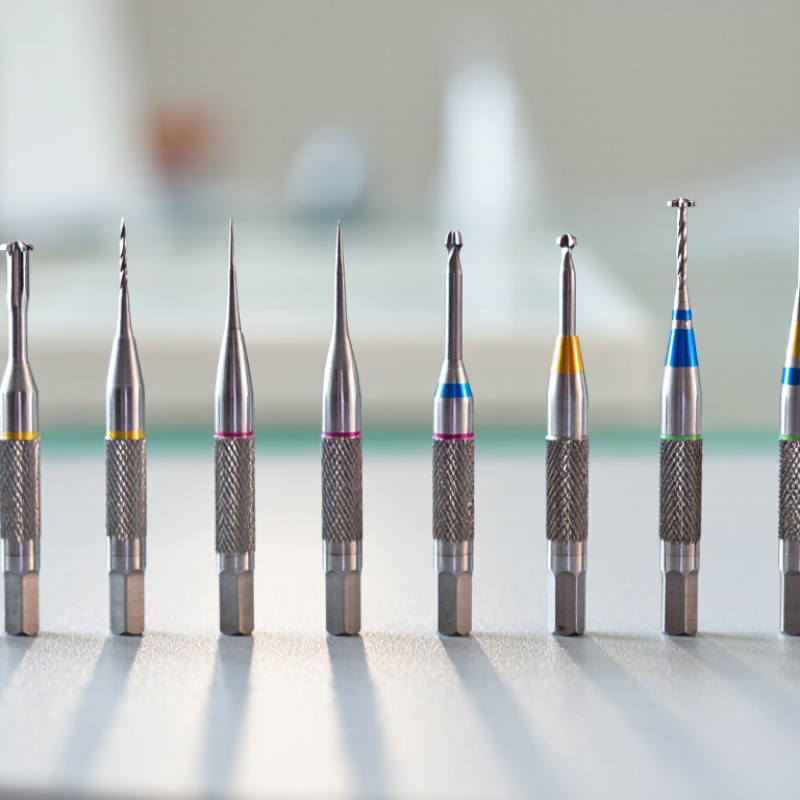
| 9 | Color-coded implant driver set | High-volume clinics and purchasing departments seeking faster instrument identification | Manual, contra-angle, or torque-wrench-compatible formats depending on the set | Multiple profile and size combinations identified by engraved or color markings | Stainless steel drivers with medical-grade color coating or identification rings | Torque limits are determined by the individual driver, screw, and compatible wrench | Reusable if the coating and identification system are validated for steam sterilization | Declaration of Conformity, IFU, color-code legend, sterilization validation, and component traceability | Usually 12 months; coating wear may be excluded from warranty coverage | Speeds selection and reduces errors, but markings must remain legible after repeated processing | ★★★★☆ |
| 10 | Single-use sterile implant screwdriver | Procedures requiring sterile, ready-to-use instruments or simplified reprocessing | System-specific manual or torque-wrench connection | Usually one specified hex or star profile per sterile pack | Stainless steel driver with sterile barrier packaging | Torque use must comply with the compatible implant system and the product label | Single-use; do not reprocess or resterilize unless explicitly authorized by the manufacturer | Declaration of Conformity, sterile-packaging validation, sterilization method, shelf life, IFU, and UDI information where applicable | Replacement is normally limited to unopened, damaged, or defective packs before expiry | Convenient for sterile workflows but has a higher per-procedure cost and more packaging waste | ★★★☆☆ |